
When Orange Groves Gave Way to Neighborhoods: Brandon's Changing Landscape |
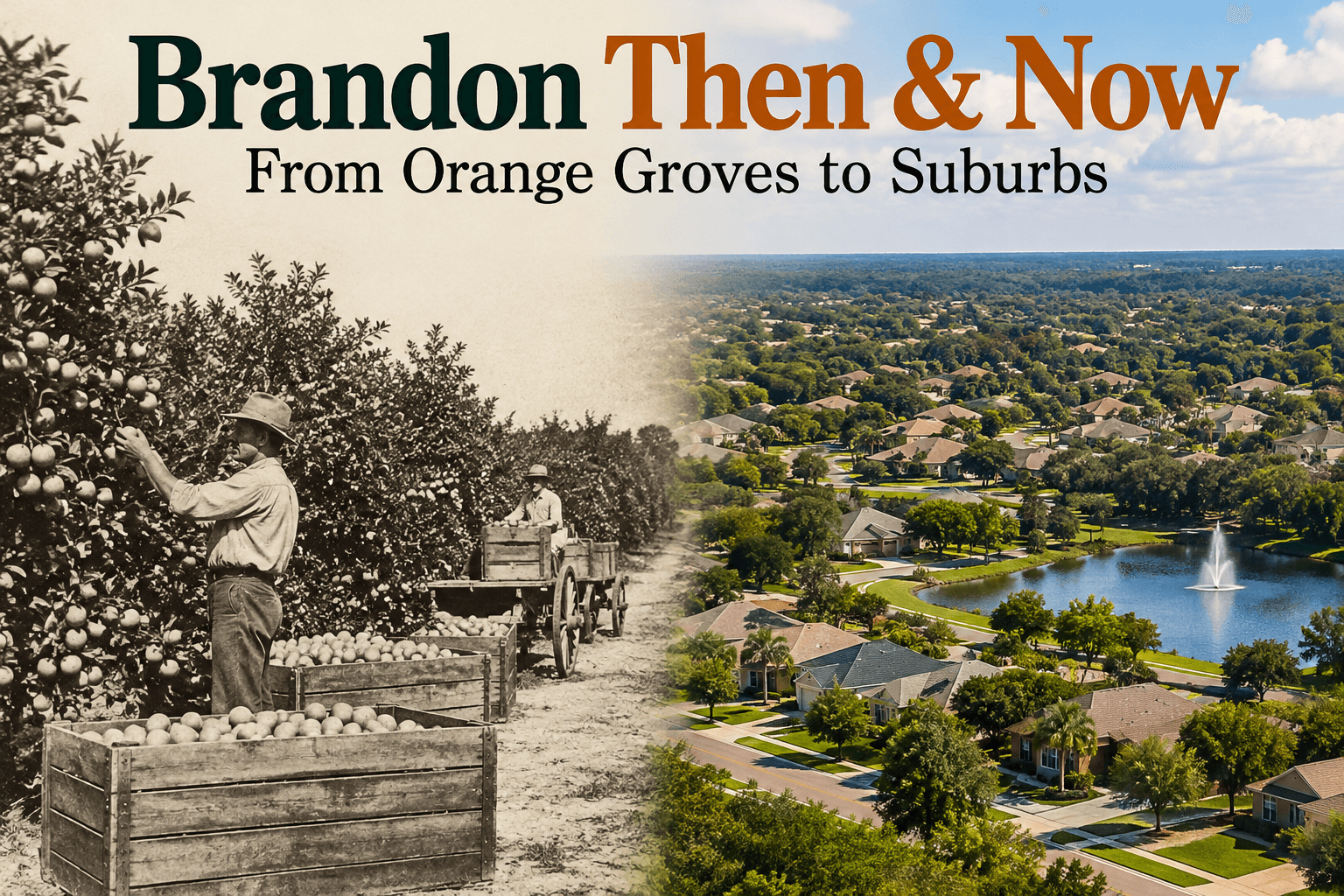
Before subdivisions and shopping centers transformed the area, citrus groves, farms, and packing houses helped shape everyday life in Brandon. |
By Ralph
Drive through Brandon today, and you'll find established neighborhoods, shopping centers, restaurants, schools, and busy roads.
But travel back through the community's history, and the landscape tells a very different story.
Long before Brandon became the suburban community familiar to residents today, agriculture played an important role in local life.
Citrus groves, cattle, and farmland were part of the area's early economy, while rail transportation connected the developing community to surrounding markets. When agriculture shaped Brandon
Brandon's historical marker traces the community's beginnings to the arrival of the railroad and the establishment of the townsite in 1890.
The marker describes pioneer families raising cattle, growing citrus, and farming their land.
It also identifies the intersection of Victoria Street and Moon Avenue as the center of town around the beginning of the 20th century.
Nearby were the railroad depot, a general store, the post office, and Varn's citrus packing house.
These details offer a glimpse of a community whose daily life was closely connected to agriculture and transportation. From rural roads to growing neighborhoods
For decades, Brandon remained relatively small.
Its roads, businesses, and residential areas were very different from those of today. Residents relied on local agriculture, nearby services, and transportation connections to Tampa.
Following World War II, population growth and increasing demand for housing began changing communities throughout Florida.
Brandon experienced substantial growth beginning in the 1950s, as new residential neighborhoods, schools, and businesses appeared.
Land that had once supported agriculture increasingly became part of a developing suburban landscape. What changed—and what remained?
Brandon's transformation did more than replace groves and fields with houses and shopping centers.
It changed how people traveled, worked, shopped, and interacted with their neighbors.
New schools and neighborhoods reflected a growing population. Commercial development expanded the range of services available close to home.
Yet reminders of Brandon's earlier identity remain in its historical records, older roads, family histories, and place names. Preserving the memories
For longtime residents, the agricultural past may be more than a chapter in a history book.
Some may remember seeing citrus groves or open land where neighborhoods and businesses stand today.
Those memories can help preserve details of Brandon's changing landscape that might otherwise be lost.
Do you remember an orange grove or farm in Brandon? Where was it, and what stands there today?
Crosstown Journal welcomes readers' memories and historical photographs that can be accurately dated and identified.
Because understanding where Brandon came from helps tell the story of the community it has become.
|
0 Comments
Join the conversation
Be the first to comment
Share your thoughts above.