
Blood From the Sky: Hillsborough’s New Drones Could Deliver Lifesaving Blood in Under Three Minutes |
With one of two launch sites in Riverview, a first-of-its-kind Hillsborough County program aims to put whole blood into paramedics’ hands during the critical first minutes of an emergency. |
By Ralph
Imagine a serious crash somewhere in eastern Hillsborough County.
Paramedics arrive and discover that a patient is losing a dangerous amount of blood.
They can stabilize the patient. They can start an IV. They can begin the trip toward the hospital.
But there's something most ambulances don't routinely have with them:
whole blood.
Beginning as soon as October, Hillsborough County Fire Rescue plans to tackle that problem in a way no other emergency medical service in the country has done.
They're going to fly the blood to the patient.
Not by helicopter.
By drone.
Hillsborough County Fire Rescue publicly demonstrated its new Drone Whole Blood Delivery Program on Monday, Sept. 28, calling it the first program of its kind in the United States.
And one of the program's two bases will be right in our part of Hillsborough County—Fire Station 37 in Riverview. The Race Against the Clock
When someone is suffering severe blood loss, getting blood into the patient quickly can be critical.
Under the new system, a 911 operator or paramedic at an emergency scene can request a unit of whole blood. A drone carrying the blood in a temperature-controlled system can then be dispatched directly to the scene.
The expected speed is remarkable.
Hillsborough County says the average delivery time within each operating area is expected to be just under three minutes. Even at the farthest reaches of the initial coverage area, officials expect delivery within approximately five minutes.
That means paramedics could potentially begin giving a patient blood before the ambulance leaves for the hospital.
Tampa General Hospital describes the program as moving an important portion of trauma care from the hospital to the scene itself. Why Not Just Put Blood on Every Ambulance?
That sounds like the obvious solution.
But Hillsborough County Fire Rescue covers roughly 900 square miles, and officials say most ambulances don't carry whole blood. There's also no way to know beforehand which ambulance will encounter the next patient who desperately needs it.
That problem caught the attention of HCFR Rescue Division Chief Todd Carnell, a 31-year department veteran.
Carnell began asking a different question:
Instead of trying to put blood everywhere, what if emergency crews could rapidly send it wherever it was actually needed?
He spent more than two years developing the idea, eventually working with partners including Tampa General Hospital, Archer First Response Systems and OneBlood.
The answer became a drone. Two Drones. Seventy Square Miles.
The initial pilot will operate from two Hillsborough County
Fire Rescue stations.
One drone will be based at Station 9 in Sabal Park.
The second will be at Station 37 in Riverview.
Each system is designed to cover approximately 35 square miles, creating an initial combined coverage area of about 70 square miles. The county says the operating area will stretch from around Interstate 4 and Interstate 75 south to just below Gibsonton Drive.
That makes this more than an interesting Tampa Bay technology story.
One of the two drones will be operating from our side of the county. What Happens When Someone Needs Blood?
The process is designed to happen while the rest of the emergency response is already underway.
If a 911 call indicates severe blood loss, emergency crews respond normally.
If whole blood is needed, a drone can be dispatched carrying a temperature-controlled unit directly to the scene.
While it's flying, paramedics can prepare the patient—establishing IV access and beginning other treatment.
The drone arrives.
The crew retrieves the blood.
And if medically appropriate, the transfusion can begin right there at the emergency scene.
The system could be used in emergencies involving major blood loss, including serious traffic crashes, traumatic injuries, postpartum hemorrhage and other medical emergencies. Flying Beyond What the Pilot Can See
There's another important piece to making the system work.
A conventional drone operator normally needs to comply with restrictions governing flights beyond the operator's visual line of sight.
Hillsborough County says HCFR received a Beyond Visual Line of Sight waiver from the Federal Aviation Administration for the two systems. Archer First Response Systems will provide monitoring, maintenance and piloting support.
That allows the aircraft to function as an emergency-delivery system rather than simply as a drone someone has to stand nearby and watch. This Is Still a Pilot Program
As impressive as the technology sounds, there's an important distinction to make.
It hasn't yet proved itself during a year of real Hillsborough County emergencies.
County commissioners approved the program on Sept. 2, and live operations are expected to begin in October. The first year will serve as a proof-of-concept pilot.
That's when officials will begin learning how the concept performs outside demonstrations and planning exercises.
The county's longer-term goal is to enlarge the individual operating areas and eventually expand coverage throughout Hillsborough County. Why This Matters to Brandon
It's easy to look at a drone and focus on the technology.
But that's not really the story.
The story is time.
When someone is losing blood rapidly, the hospital may only be several miles away—but traffic, distance and the realities of emergency transportation don't disappear simply because the patient needs help quickly.
The new system attempts to reverse the equation.
Instead of waiting until the patient reaches the blood... bring the blood to the patient.
And do it while paramedics are already treating them.
If the Hillsborough pilot works as intended, something developed and tested right here in our county could eventually offer other emergency services around the country a new way to respond to severe bleeding.
For now, two drones will be stationed in Hillsborough County.
One of them will be in Riverview.
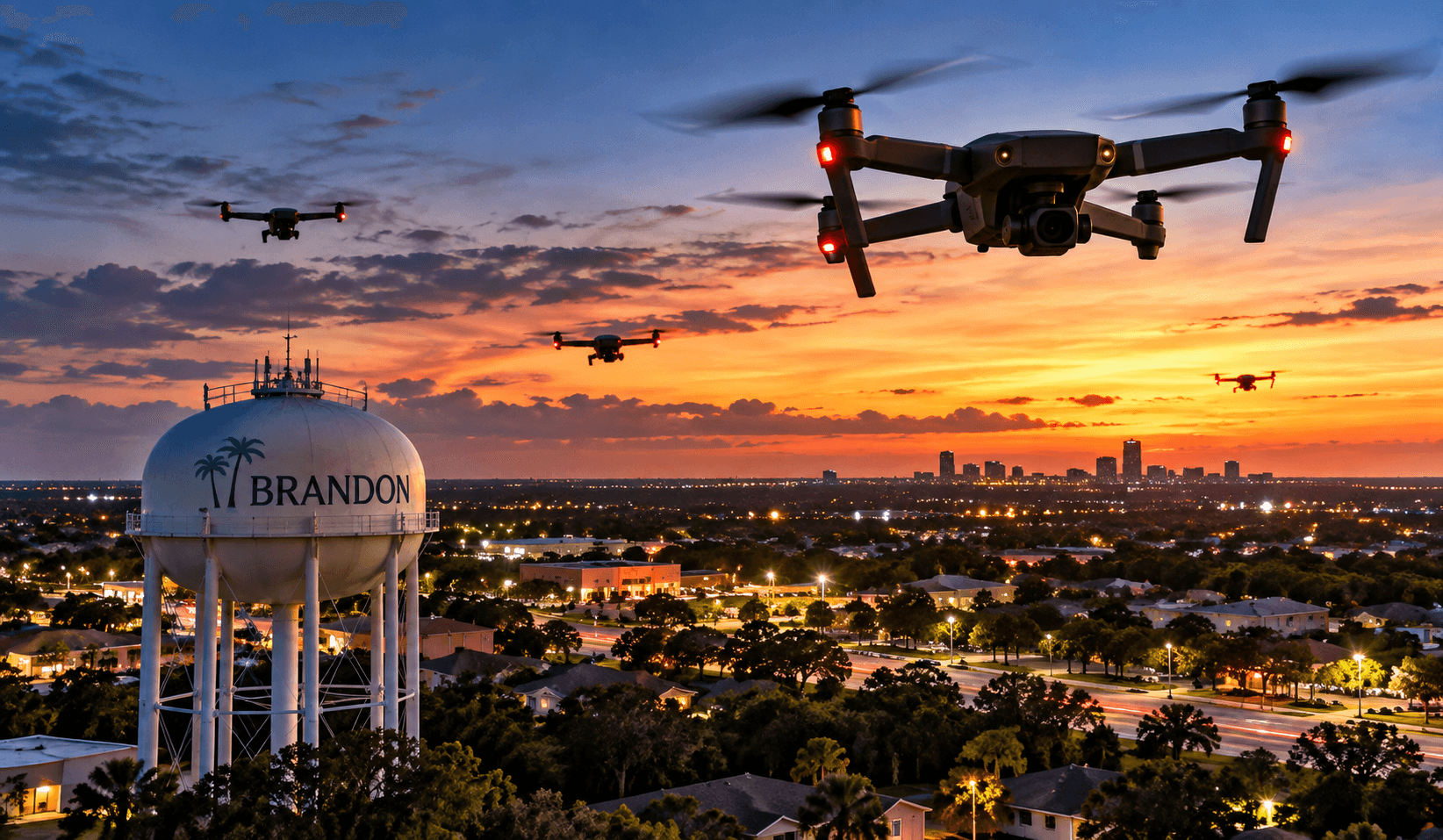
And sometime soon, when an ordinary 911 call becomes a race against the clock, Brandon-area residents may look toward the sky and see something unusual flying overhead.
It won't be carrying a package.
It could be carrying something far more important—a second chance. |
0 Comments
Join the conversation
Be the first to comment
Share your thoughts above.